
Before You Begin: Prerequisites
-
- Timeframe: 2–4 weeks for surface healing; full skin barrier recovery takes up to 3 months, with deeper dermal layers continuing to stabilize for up to 6 months.
-
- Skill Level: Beginner — no medical training required, though attentiveness to a daily routine matters more than prior experience.
-
- Supplies needed: mild, fragrance-free soap, tattoo aftercare ointment (Aquaphor or A&D ointment), unscented lotion, sterile gauze, sunscreen (SPF 30+), and your tattoo artist’s written instructions.
-
- Optional supplies: Saniderm, Tegaderm, or Second Skin bandages; witch hazel for inflammation; hypoallergenic lotion for sensitive skin; cocoa butter for long-term maintenance.
-
- Estimated cost: Aftercare supplies typically run $15–$40 total, not including the tattoo itself.
Step 1: Manage the First 24 Hours After Your Tattoo
Leave the Original Bandage in Place
Your tattoo artist will apply either a traditional plastic wrap bandage or a modern adhesive like Saniderm, Tegaderm, or Second Skin. Leave this on for 2–6 hours (plastic wrap) or 3–5 days (adhesive bandages), per your artist’s recommendation. Adhesive bandages create a waterproof barrier that allows showering without direct water contact, which many clients find more convenient than repeated rewrapping.Remove the Bandage Correctly
To remove a tattoo bandage without pain, peel slowly in the direction of hair growth while running warm water over the area. Never rip it off. If an adhesive bandage sticks stubbornly, run warm water over it for a few more minutes or hold a damp washcloth against it before trying again.Expect Redness and Swelling
Tattoo redness and swelling are normal for 24–72 hours. Swelling that persists past day 4 or gets worse should be monitored closely, as it may signal irritation or infection. Larger tattoos, such as full sleeves or back pieces, may show more pronounced swelling than small line-work designs due to the greater area of skin trauma.Step 2: Establish a Tattoo Washing Routine
Choose the Right Soap
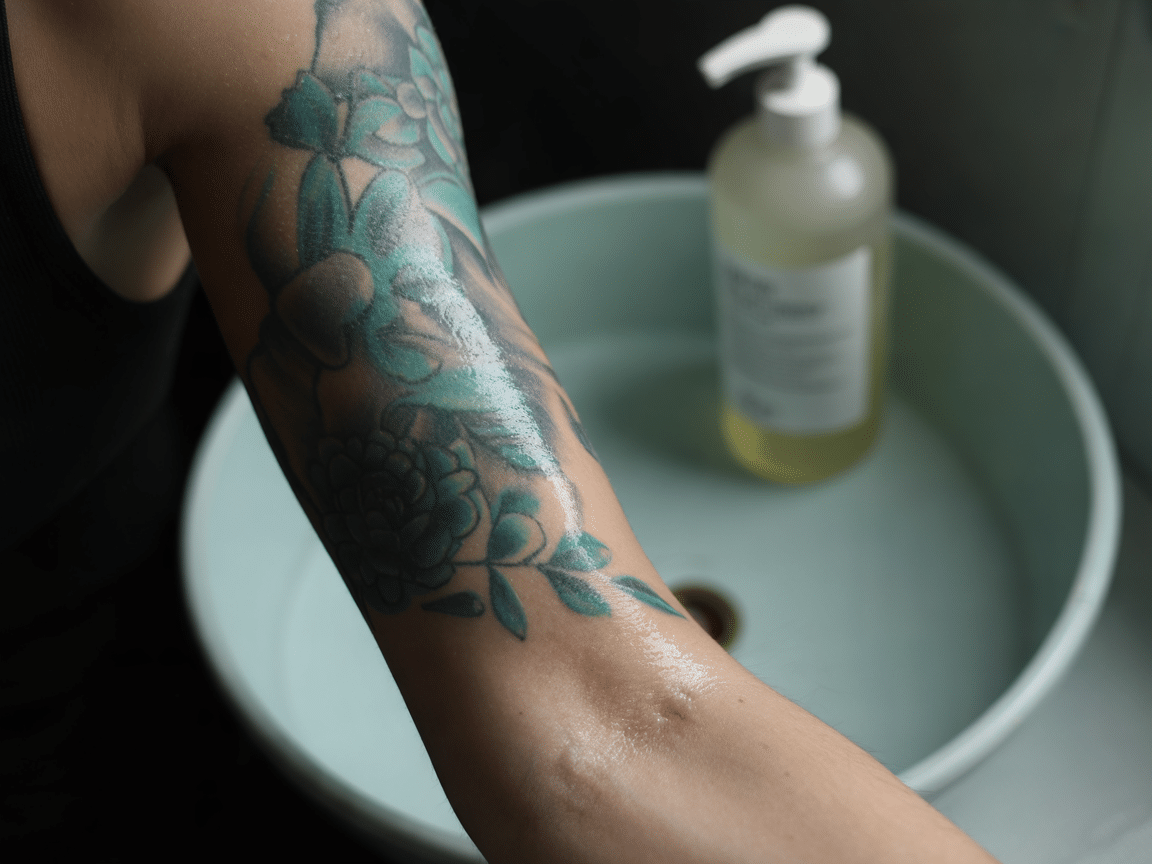
Use a mild, fragrance-free soap to clean a new tattoo properly. Avoid scented body washes, which can irritate healing skin and disrupt the tattoo’s skin barrier. Many studios recommend dedicated tattoo cleansers, though any plain, fragrance-free, dye-free soap works.Wash With Correct Technique
-
- Wet the tattoo with lukewarm water—avoid hot water, which dries out and irritates healing skin.
-
- Apply a small amount of soap to clean hands.
-
- Gently cleanse in circular motions for 10–15 seconds, using fingertips only, never a washcloth or loofah.
-
- Rinse thoroughly and pat dry with a paper towel or clean cloth, avoiding rubbing motions that can disturb healing skin.
Follow the Correct Washing Frequency
Wash your tattoo 2–3 times daily during the first week. Over-washing strips natural oils and slows the tattoo healing process, while under-washing can trap bacteria beneath ointment layers and raise infection risk.Step 3: Build a Tattoo Moisturizing Routine
Apply Thin Layers of Ointment (Days 1–4)
Use a tattoo aftercare ointment such as Aquaphor or A&D ointment in a thin layer. Petroleum jelly products like Vaseline can be used sparingly but may trap excess moisture if applied too thick—thin layers are key to avoiding clogged pores. A pea-sized amount is typically enough for a tattoo roughly the size of a palm.Switch to Lotion (Day 5 Onward)
Transition to an unscented or hypoallergenic lotion once scabbing begins. Cocoa butter is also effective for long-term hydration once peeling resolves, and many clients continue using it for months to maintain ink vibrancy and skin softness.Moisturize at the Right Frequency
Apply moisturizer 2–3 times daily, or whenever skin feels tight. Keeping a tattoo moisturized overnight prevents cracking and helps reduce itching. Set a phone reminder during the first week if you tend to forget midday applications.Step 4: Navigate the Tattoo Healing Stages
Tattoo Scabbing Stage (Days 3–6)
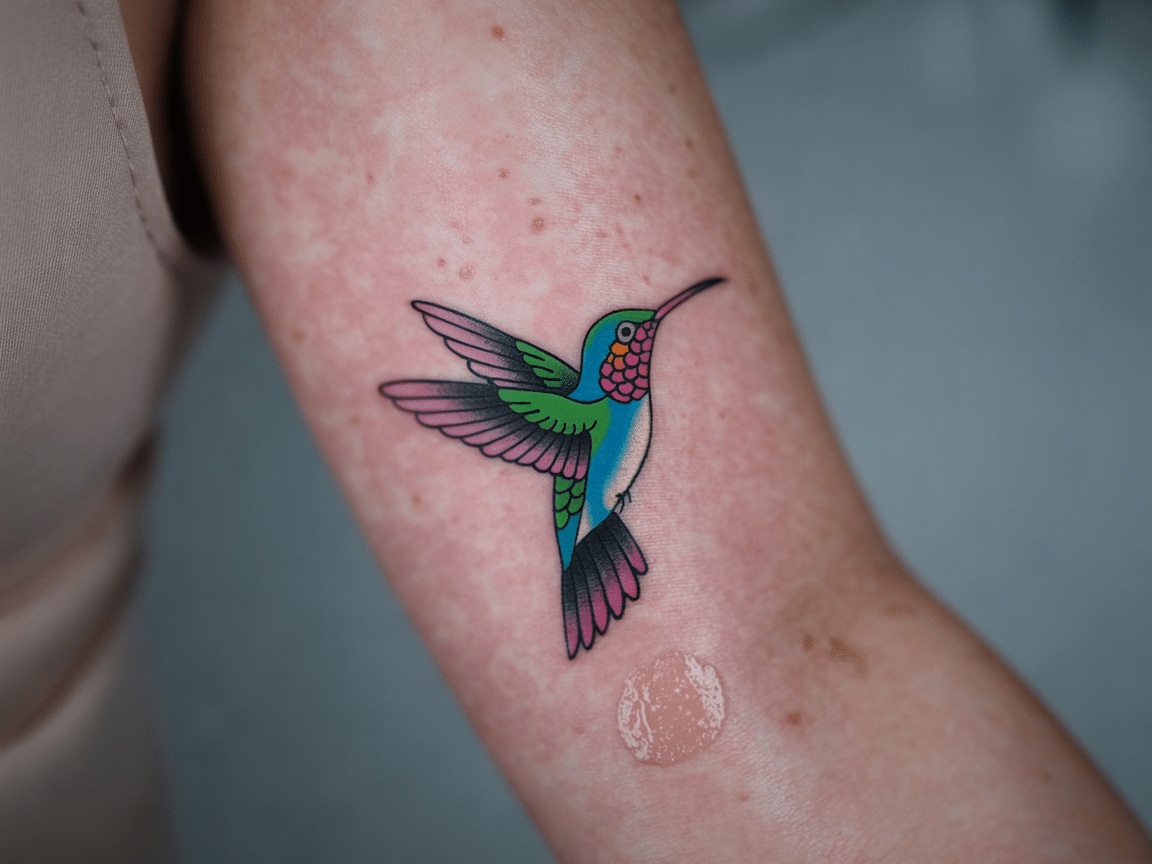
Light scabbing is a normal part of tattoo healing. Expect thin, translucent scabs rather than thick, crusty ones—the latter may indicate too much ointment or insufficient cleaning. Do not pick at scabs; doing so can pull out tattoo ink and cause scarring or patchy color loss.Tattoo Peeling Stage (Days 6–14)
During the peeling stage, skin flakes like a peeling sunburn. It is normal to see small bits of colored ink in the shed skin; this does not mean the tattoo is fading. Continue moisturizing to support the skin barrier and prevent dryness-related cracking.Manage Tattoo Itching
If your tattoo is itchy, pat (don’t scratch) the area, and apply a cold compress or witch hazel to reduce inflammation. Lotion also relieves most itching within minutes. Antihistamines like diphenhydramine can help with severe itching, but consult a pharmacist or doctor before use.Step 5: Protect Your Tattoo Long-Term
Apply Sunscreen After Full Healing
Wait until your tattoo is fully healed (3–4 weeks) before using sunscreen, and keep it covered with loose clothing outdoors until then. Apply SPF 30+ daily afterward to prevent color fading from UV exposure. Mineral sunscreens containing zinc oxide are often gentler on healed tattoos than chemical sunscreens for people with sensitive skin.Avoid Submersion
Avoid baths, pools, hot tubs, and oceans until the tattoo is fully healed, typically 2–4 weeks. Showers are fine, but limit direct water pressure on the tattoo during the first week. Chlorine and saltwater can dry out healing skin and expose the open wound to bacteria.Take Exercise Precautions
Avoid heavy sweating or friction-causing workouts for 48–72 hours. Sweat can introduce bacteria and irritate fresh ink. When resuming exercise, wear loose, breathable clothing over the tattooed area and shower immediately afterward using fragrance-free soap. For a complete reference on daily routines, many clients bookmark their studio’s tattoo aftercare guide to track each healing milestone accurately.Troubleshooting Common Tattoo Healing Issues
| Problem | Likely Cause | Solution |
|---|---|---|
| Excessive redness after day 5 | Possible tattoo infection | Contact a doctor promptly and let your tattoo artist know |
| Pus or foul odor | Bacterial infection | Seek medical care; do not self-treat with ointment alone |
| Raised, itchy bumps | Allergic reaction to ointment or ink | Switch to hypoallergenic lotion and consult a dermatologist |
| Patchy color after healing | Incomplete ink retention | Schedule a tattoo touch-up with your original artist |
| Persistent dryness/flaking beyond 3 weeks | Insufficient moisturizing | Increase moisturizer application frequency |
| Bandage causing irritation | Adhesive sensitivity | Switch to sterile gauze with breathable tape |
| Fever or chills with tattoo redness | Spreading infection | Seek urgent or emergency care immediately |
| Raised, textured scar tissue after healing | Hypertrophic scarring from picking or friction | Consult a dermatologist about silicone scar treatments |
Tattoo Aftercare Dos and Don’ts
-
- Do wash hands before touching your tattoo.
-
- Do wear loose clothing over the tattooed area.
-
- Do keep bedsheets clean during the first week to reduce bacterial exposure overnight.
-
- Don’t apply numbing cream after your tattoo without artist approval—it can interfere with healing.
-
- Don’t expose the tattoo to direct sun during healing.
-
- Don’t swim in pools or natural bodies of water until the tattoo is fully healed.
-
- Don’t apply makeup, self-tanner, or exfoliants to the area until fully healed.