What Really Is a Custom Tattoo?
Twenty-six years ago, when I started tattooing in San Diego, one of my favorite routines was stopping at a newsstand and picking up whatever tattoo magazines were out that month. Publications like Tattoo Artist Magazine and International Tattoo weren’t just collections of images—they documented tattoo culture, history, and the artists who were pushing the craft forward.
You’d see conventions, interviews, and most importantly, work from tattoo artists with a clear point of view. People whose tattoos didn’t look interchangeable. Their work wasn’t built for approval—it was built to last.
That’s still what defines a custom tattoo to me.
Custom Means More Than “Original”
A custom tattoo isn’t just something that hasn’t been copied.
It’s tattoo work that is:
- Built specifically for the body it’s going on
- Designed with structure and clarity—not just detail
- Meant to be readable from a distance, not just on a screen
- Created by a tattoo artist with a distinct point of view
Custom tattoos are less about novelty and more about intention.
Designed for the Body
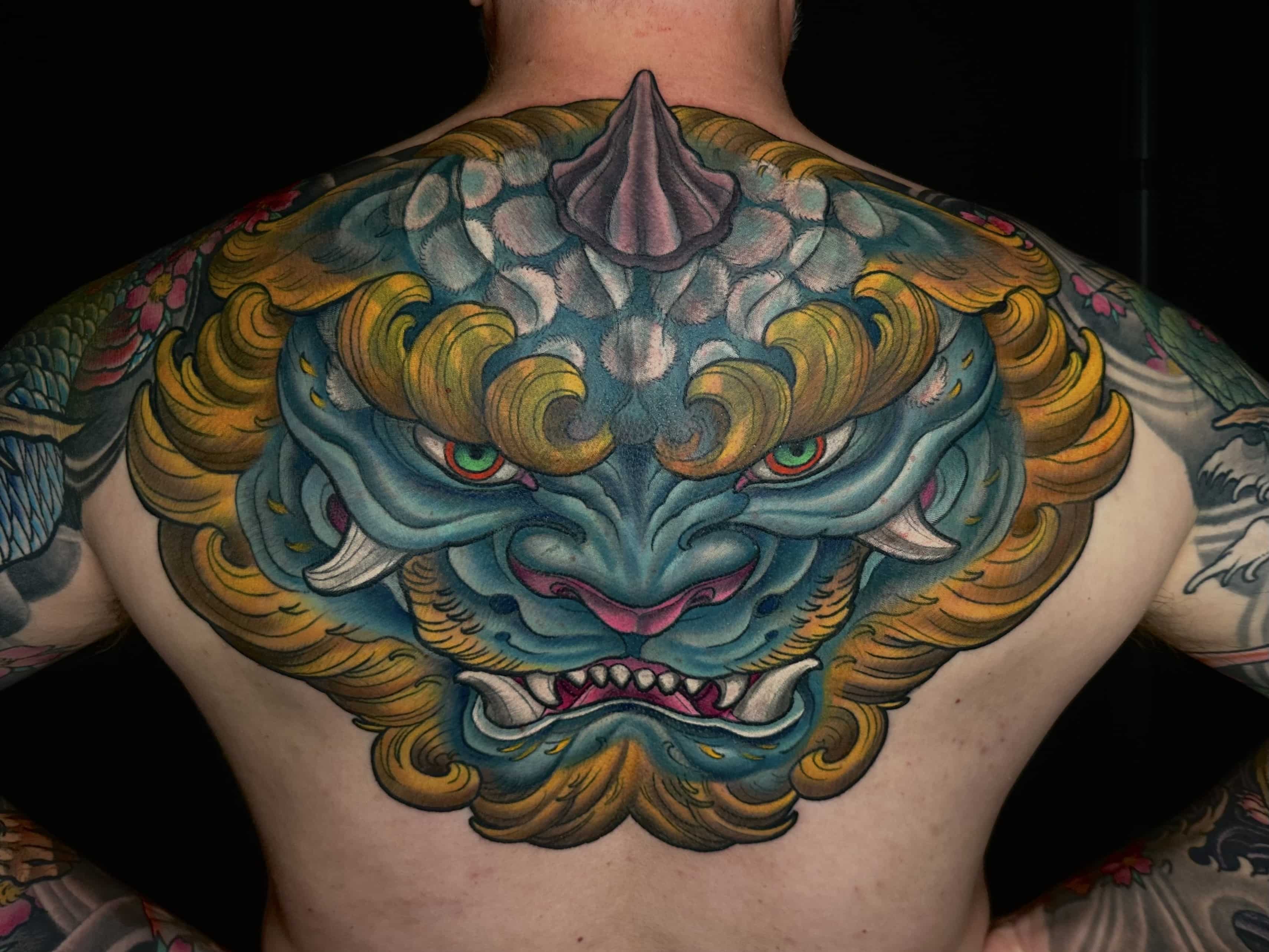
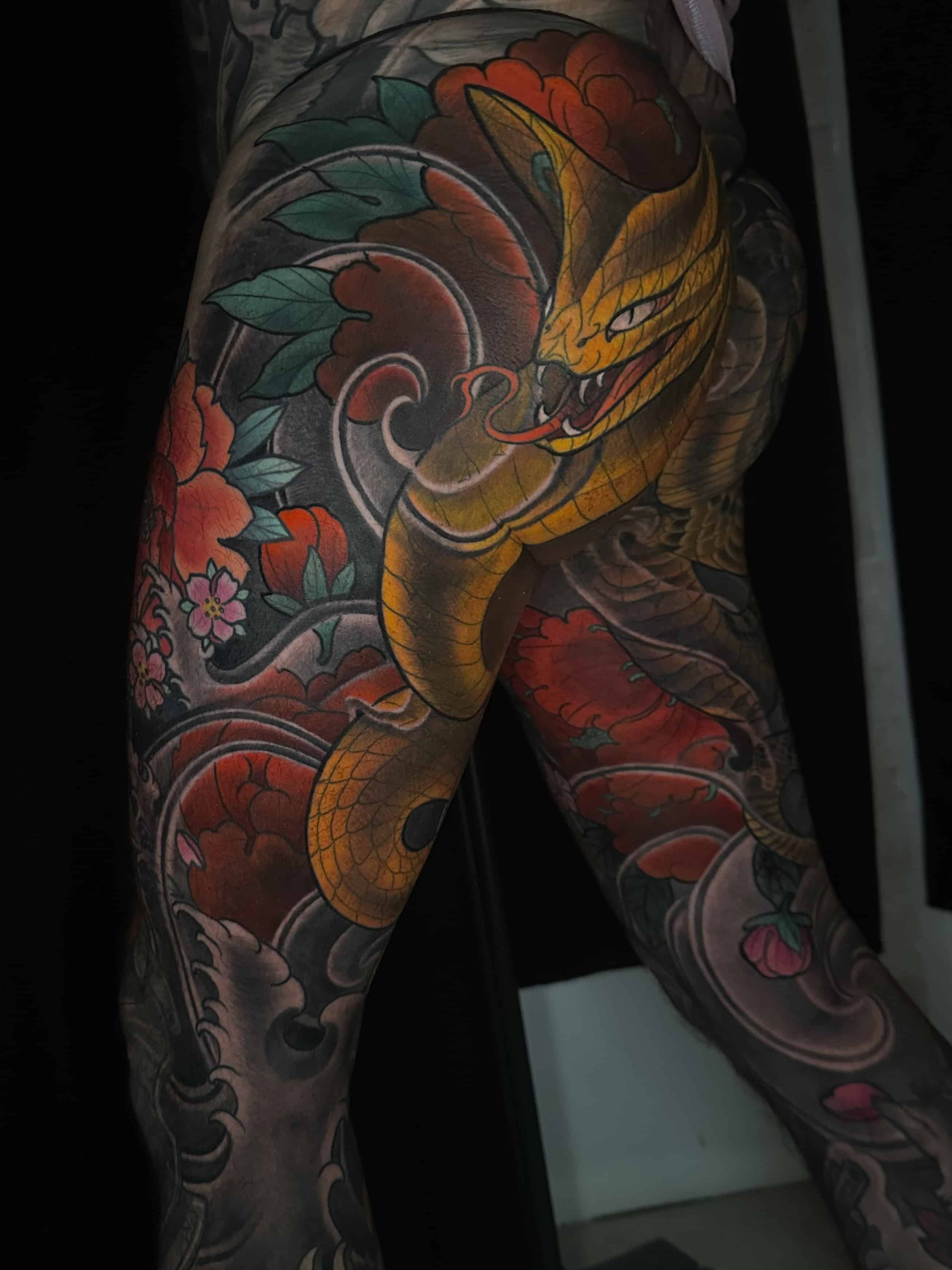
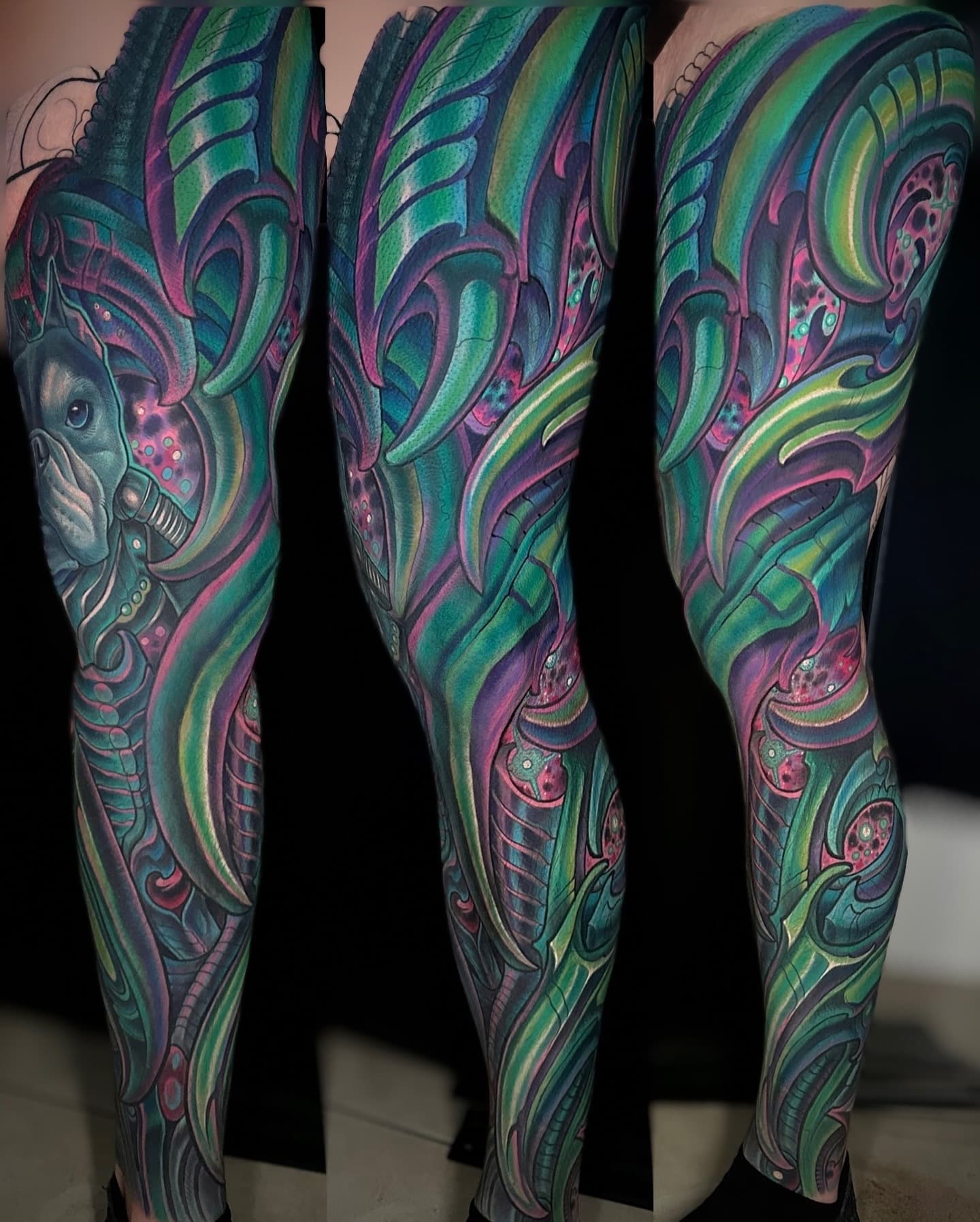
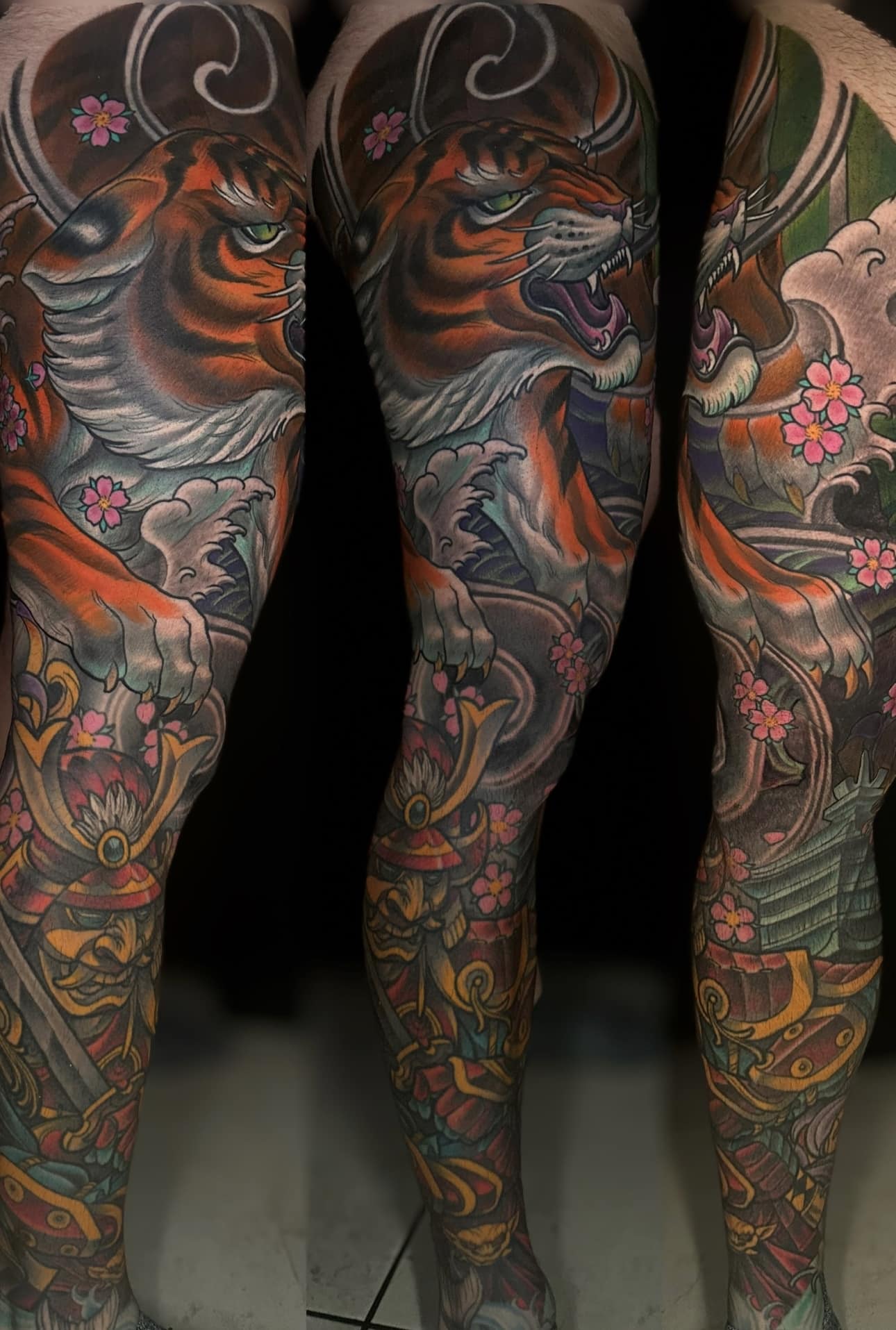
One of the biggest differences with custom tattoo design is how it works with the body’s natural anatomy.
A well-designed tattoo:
- Wraps naturally with muscle structure
- Uses direction and movement to guide the eye
- Holds together as a complete composition
This is especially important for large-scale tattoo work. Full sleeves either read as one cohesive design—or they fall apart.
What Actually Makes a Good Tattoo
Regardless of tattoo style, there are a few fundamentals that consistently hold up over time:
- Clarity — the tattoo design reads cleanly, even years later
- Structure — shapes and contrast are intentional
- Flow — the tattoo moves with the body, not against it
- Longevity — it’s built to age without losing integrity
These aren’t subjective opinions—they’re technical realities in professional tattooing.
Simplicity, Restraint, and Control
Not every custom tattoo needs to be complex.
Some of the strongest tattoo designs come from reducing a concept down to what actually matters:
- A clear focal point
- Intentional placement on the body
- No unnecessary elements
Both simple and complex tattoos rely on the same foundation: strong decision-making.
The Problem With Following Tattoo Trends
Social media has made tattooing more visible and accessible, but it has also pushed the industry toward repetition.
There’s a lot of:
- Copying
- Trend chasing
- Designs created for engagement instead of longevity
Popularity is not a reliable measure of a quality tattoo.
The Approach at Remington Tattoo in San Diego
When I opened Remington Tattoo in San Diego in 2011, the goal was straightforward:
Work with tattoo artists who have something individual to say—and the technical skill to support it.
That means:
- No copied tattoo designs
- No trend-driven work
- No shortcuts in structure or application
Just custom tattoos built with intention and experience.
Final Thought
After 26 years of tattooing, my perspective hasn’t changed.
A custom tattoo is defined by the artist behind it—their experience, design sense, and ability to create something that works beyond the moment it’s finished.
Not just something that looks good today.
Something that holds up for years.
All tattoos featured in this article are original work by Terry Ribera, Remington Tattoo, San Diego.
All work © Terry Ribera. Remington Tattoo, San Diego, CA.